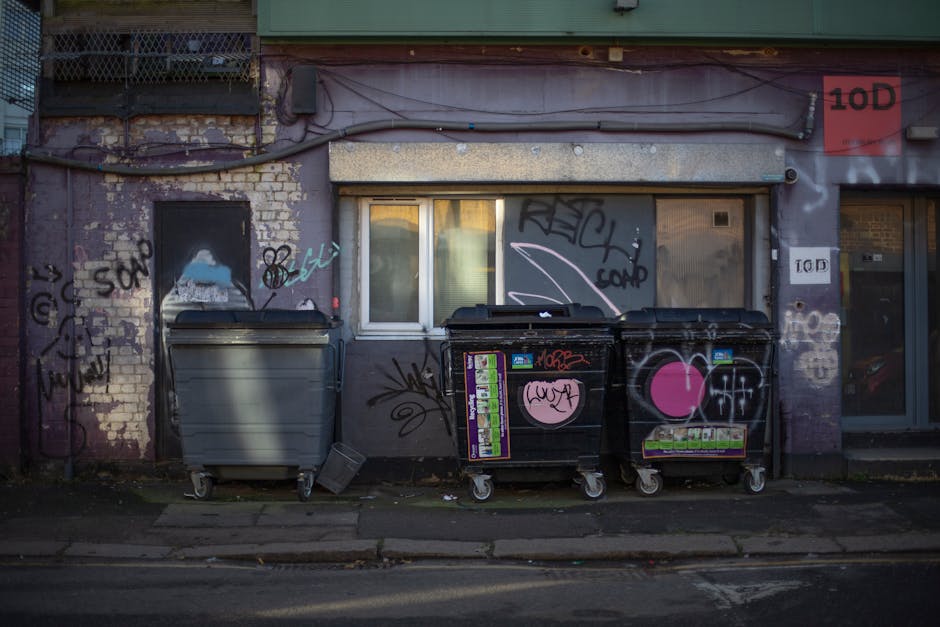
Bermondsey, Southwark: Rubbish clearances near Jamaica Rd SE16
If you live or work near Jamaica Rd in Bermondsey, you already know how quickly clutter becomes a problem. A hallway full of flat-pack packaging, a garden pile that has outstayed its welcome, or a storage room packed with broken furniture can start to affect access, safety, and even how a property feels day to day. That is where Bermondsey, Southwark: Rubbish clearances near Jamaica Rd SE16 becomes genuinely useful: a practical way to remove unwanted items quickly, responsibly, and without turning your week upside down.
This guide explains what local rubbish clearance involves, how it typically works, what to look for in a provider, and how to avoid the common mistakes that create delays or extra cost. If you want a cleaner flat, a safer shopfront, or a less chaotic renovation site, you will find the basics here - plus the details people often wish they had checked first.
Practical summary: the best rubbish clearance service is usually the one that is transparent about what it can remove, clear on pricing, respectful of access constraints, and committed to recycling or reuse where possible.
Table of Contents
- Why Bermondsey, Southwark: Rubbish clearances near Jamaica Rd SE16 Matters
- How Bermondsey, Southwark: Rubbish clearances near Jamaica Rd SE16 Works
- Key Benefits and Practical Advantages
- Who This Is For and When It Makes Sense
- Step-by-Step Guidance
- Expert Tips for Better Results
- Common Mistakes to Avoid
- Tools, Resources and Recommendations
- Law, Compliance, Standards, or Best Practice
- Options, Methods, or Comparison Table
- Case Study or Real-World Example
- Practical Checklist
- Conclusion
- Frequently Asked Questions
Why Bermondsey, Southwark: Rubbish clearances near Jamaica Rd SE16 Matters
Jamaica Rd sits in a busy stretch of Bermondsey where homes, converted flats, shops, and small businesses often have limited storage and tight access. That combination matters. Waste left too long can block communal areas, attract complaints from neighbours, and make day-to-day movement awkward. In a terrace, a flat above a shop, or a narrow mews-type access route, even a modest pile of rubbish can become a real nuisance.
Local clearance is not just about getting rid of stuff. It is about restoring usable space in a place where space is already at a premium. For many residents, a cleanout is tied to a move, a change of tenancy, a refurbishment, an inheritance property, or simply the need to get control back after months of accumulated items. For businesses, it can be the difference between an orderly premises and a back room that quietly becomes a liability.
There is also the practical question of disposal quality. Responsible clearance services aim to separate reusable items, recyclable materials, and general waste rather than sending everything to landfill. That approach matters more than people sometimes realise, especially if you are clearing furniture, old appliances, packaging, or mixed household items. If sustainability is part of your decision, it is worth reviewing a provider's recycling and sustainability approach before booking.
And let's be honest: nobody wakes up hoping to spend a Saturday wrestling a broken wardrobe through a narrow stairwell. A good local service saves time, effort, and a lot of back pain.
How Bermondsey, Southwark: Rubbish clearances near Jamaica Rd SE16 Works
Most rubbish clearances follow a straightforward process, but the quality of that process makes a big difference. The first step is usually to describe what needs removing: the type of waste, approximate volume, whether it is downstairs or upstairs, and whether there are access issues such as controlled parking, stairs, or tight entrances. Clear information helps produce a more accurate quote and reduces surprises on the day.
From there, a provider may ask for photos or a short inventory. That is especially useful for mixed loads. A pile containing old furniture, cardboard, renovation offcuts, and a broken freezer is not the same as a single bulky item. The cleaner and more detailed your description, the smoother the job tends to be. If you are unsure what counts as furniture, domestic rubbish, or larger mixed waste, a service such as general waste removal is often the broadest starting point.
On the day, the team usually arrives, confirms the load, and starts loading items into the vehicle. Good operators will aim to protect walls, communal floors, and lifts where applicable. That matters in Bermondsey properties where shared entrances and stairwells are common. If the job includes bulky items, you may want to look at specialist help such as furniture disposal or furniture clearance rather than trying to shoehorn everything into a general collection description.
For larger domestic projects, people often combine several services in one visit. A loft, a garage, and a spare room can all accumulate different categories of clutter. In those situations, related options like house clearance, home clearance, or flat clearance can be more efficient than booking separate collections.
Key Benefits and Practical Advantages
The obvious benefit is convenience, but the real value goes beyond that. A reliable clearance service reduces stress, shortens disruption, and helps you make faster decisions about what stays and what goes. That matters when a property sale, move-out deadline, or renovation schedule is on the line.
- Speed: What might take you an entire weekend can often be handled far faster by a crew with the right equipment and vehicle space.
- Less physical strain: Heavy or awkward items, such as wardrobes, mattresses, and old white goods, are easier to manage with trained help.
- Better sorting: Good teams separate materials for reuse, recycling, and disposal rather than treating every item the same.
- Improved presentation: This is especially useful for landlords, estate agents, and business owners who need a property to look presentable quickly.
- Safer access: Reducing trip hazards and blockage in communal areas can prevent complaints and accidents.
There is also a financial angle, even if it is not always obvious at first glance. Delays can create knock-on costs: missed tradespeople, postponed tenancy handovers, or a second visit because the original clearance was incomplete. Booking the right service first time is often cheaper than using a quick fix and then paying for a second round.
If you are balancing budget and urgency, it may help to review pricing and quotes before making a decision. Transparent pricing is usually a stronger sign of professionalism than a vague "we'll see on the day" approach.
Who This Is For and When It Makes Sense
This kind of service is useful for a wide range of people in Bermondsey and the wider Southwark area. The common thread is simple: you have more stuff than time, space, or lifting capacity.
Homeowners and tenants often need clearance during moves, refurbishments, bereavement-related property changes, or after years of built-up clutter. A typical Bermondsey flat might have no lift, a tight stairwell, and limited parking, which makes doing it all yourself more complicated than it first appears.
Landlords and letting agents use clearance services when a tenant leaves items behind, when a property needs to be reset quickly, or when a flat has become difficult to prepare for viewings. In these cases, speed and reliability matter almost as much as price.
Local businesses may need office or shop clearance when replacing furniture, closing a unit, reconfiguring a workspace, or clearing back-of-house stock and packaging. For those jobs, a more commercial approach such as office clearance or business waste removal is often the better fit.
Builders and renovators may be dealing with bagged debris, timber offcuts, packaging, and broken fixtures. For that type of work, builders waste clearance can help keep the site usable and reduce trip hazards.
Garden and outdoor-space owners may need a different type of clearance altogether. If the issue is clippings, old pots, broken fencing, or soil bags, then garden clearance is usually more suitable than a generic household collection.
Sometimes the decision is less about a major project and more about getting unstuck. A room that has become a storage room, a garage full of unloved items, or a loft that has never really been sorted can all reach the same tipping point.
Step-by-Step Guidance
If you want the process to run smoothly, a bit of preparation goes a long way. You do not need to stage the property like a showroom, but you do need enough order to make the quote and collection accurate.
- Identify the waste categories. Separate furniture, general rubbish, renovation waste, garden waste, and anything unusual or restricted.
- Check access. Note stairs, lifts, parking restrictions, loading distance, and any narrow entrances.
- Take clear photos. This is one of the simplest ways to avoid misunderstandings about volume.
- Ask what is included. Confirm labour, loading, disposal, and any extra charges before booking.
- Remove keep items first. Anything you want to keep should be moved well away from the clearance area.
- Prepare for sorting. If you have reusable items, mention them early so the team can advise on the best route.
- Review the quote and timing. Make sure the schedule works with tenants, neighbours, tradespeople, or building access rules.
For mixed household jobs, a service like loft clearance or garage clearance can be a smart choice when the pile is concentrated in one area. If the whole property needs attention, a broader house clearance usually creates a cleaner outcome and avoids piecemeal booking.
One practical tip: keep a small "decide later" box for items you are unsure about. That stops you from making rushed decisions under pressure, which is how sentimental items and important paperwork sometimes end up in the wrong pile.
Expert Tips for Better Results
A well-run clearance is usually the product of good preparation, not luck. Here are the details that tend to separate a smooth job from a frustrating one.
Be specific about access and parking
In areas near Jamaica Rd, parking and loading arrangements can shape the entire job. If a vehicle cannot get close, labour time and handling effort may increase. It helps to be upfront about restrictions, permit requirements, and the distance from the property to the loading point.
Keep recyclable material separate where practical
You do not need to sort everything into perfect categories, but separating cardboard, metals, reusable furniture, and general waste makes recycling easier. That small bit of effort can improve the efficiency of the clearance and reduce unnecessary disposal costs.
Use the right service for the right job
A single broken armchair is not the same as a full property clear-out. Matching the service to the task avoids underquoting, overpaying, or booking the wrong vehicle size. If you are mainly disposing of one or two large items, furniture-focused pages such as furniture clearance and furniture disposal are worth checking first.
Think ahead about the next stage
If the clearance is linked to decorating, repairs, letting, or moving, plan the order of work. Clearance first, then trades, then final cleaning is often the least painful sequence. It sounds obvious until someone books the painter before the old sofa is out.
Choose providers who talk plainly about standards
Clear communication is a quality signal. Providers who can explain what they collect, how they dispose of it, and what happens if the load changes on the day usually run more organised operations. It also helps to review their health and safety approach and insurance and safety information where available.
Common Mistakes to Avoid
Most clearance problems are preventable. The following mistakes come up again and again, and they are easy to avoid once you know what to look for.
- Booking too late: Last-minute arrangements can reduce your options and push up stress levels.
- Undershooting the volume: A load that looks "small" in a room can turn out to be much larger once moved and stacked.
- Ignoring access limitations: Narrow staircases, no lift, or difficult parking should be factored in early.
- Mixing keep and clear piles: This leads to accidental removals, delays, and avoidable arguments.
- Assuming all waste is the same: Builders' rubble, furniture, electrical items, and garden waste can require different handling.
- Failing to check what happens to reusable items: If reuse or recycling matters to you, ask before booking.
Another common issue is not reading the terms properly. Nobody loves the fine print, but a few minutes spent on terms and conditions can save you a headache later if access, cancellation, or load changes become relevant.
Tools, Resources and Recommendations
You do not need specialist equipment to prepare for a clearance, but a few simple tools help.
- Phone camera: Use it to document the load and send clear photos for quoting.
- Marker labels: Helpful for marking what stays, what goes, and what needs checking.
- Bin bags and boxes: Useful for loose items, papers, and smaller mixed rubbish.
- Tape or string: A simple way to keep items grouped before collection.
- Protective gloves: Good for sorting through dusty lofts, garages, or outdoor spaces.
For customers who want a quick way to compare service types, these pages are usually the most helpful starting points: home clearance, flat clearance, office clearance, and builders waste clearance. They map closely to the most common real-world scenarios around Bermondsey and Southwark.
If you want to understand the service provider better before booking, the about us page is worth a look. Trust is built on straightforward information, not polished slogans.
Law, Compliance, Standards, or Best Practice
Waste clearance in the UK should be handled with care, especially where mixed loads, electrical items, or commercial waste are involved. While this article is not legal advice, a few best-practice points are worth keeping in mind.
First, the person arranging disposal should be comfortable that waste is being passed to a legitimate carrier or clearance company. Second, hazardous items, fridges, certain electrical goods, and construction waste may need special handling. Third, if you are a business, your duty is broader: commercial waste should be managed responsibly, with records and processes that make sense for the nature of the materials.
Good operators are normally happy to discuss how items are handled and where possible how reuse or recycling is prioritised. That is one reason customers often pay attention to pages like recycling and sustainability and payment and security before placing an order. These pages do not replace due diligence, but they help you judge whether the business feels organised and transparent.
Best practice in plain English: be honest about what you have, ask how it will be handled, and keep enough documentation for your records if the waste is from a business or rental property.
Options, Methods, or Comparison Table
Not every job needs the same solution. In Bermondsey, the right choice depends on the type of waste, the amount, and how quickly it needs to be gone.
| Option | Best for | Strengths | Limitations |
|---|---|---|---|
| General rubbish clearance | Mixed household or light commercial waste | Flexible, convenient, good for varied loads | May not suit specialised waste streams |
| Furniture-specific removal | Sofas, tables, wardrobes, mattresses | Ideal for bulky items and room resets | Less efficient for mixed waste piles |
| House or flat clearance | Whole rooms, full properties, move-outs | Best for larger and more complete clear-outs | Needs clearer planning and access detail |
| Builders waste clearance | Renovation debris and site waste | Useful for trades and refurbishment work | May require more precise waste description |
| Business waste removal | Offices, shops, storage rooms, stock areas | Good for commercial premises and recurring needs | Less suited to domestic-only jobs |
As a rule, if your property has one dominant type of waste, use a focused service. If it is a blend of many things, a broader waste removal option is usually simpler.
Case Study or Real-World Example
Consider a typical Bermondsey flat near Jamaica Rd: one bedroom, limited storage, a narrow stairwell, and a front room that has gradually become a dumping ground for old shelving, packaging, a broken chair, and a box of assorted household items. The resident is moving in ten days and also needs the space ready for a decorator.
In that situation, the best approach is usually to separate the obvious keep items first, then group the clearance load into furniture, mixed rubbish, and anything recyclable. If there is a loft or cupboard that also needs clearing, adding it to the same visit can be more efficient than waiting and booking a second job. A provider offering flat clearance or home clearance would usually be a sensible fit.
The main benefit is not just that the items disappear. It is that the moving process becomes manageable again. The decorator can start on time. The hallway is usable. The resident can see what still needs packing. Sometimes that is the real win: not "less clutter", but "less friction".
If the same property had also accumulated old shelving, paperwork, and a few office bits from a home-working setup, the job might edge into office clearance territory too. Good providers can usually adapt to that mix, provided they know about it in advance.
Practical Checklist
Use this checklist before the clearance appointment. It keeps things calm and avoids the last-minute scramble.
- Identify what must go and what must stay.
- Take photos of the items and the access route.
- Measure large items if you think access may be tight.
- Check whether parking or loading restrictions apply.
- Separate obvious recyclables where practical.
- Tell the provider about stairs, lifts, or shared entrances.
- Confirm whether the load is domestic, commercial, or mixed.
- Ask what happens if the volume changes on arrival.
- Review pricing, timing, and payment details.
- Keep valuables, documents, and sentimental items out of the clearance zone.
If you are dealing with a particularly cluttered property, this is also a good time to confirm whether you need extra support for furniture, loft contents, or outdoor waste. A single visit is usually easier than trying to patch together several small collections.
Conclusion
Rubbish clearance near Jamaica Rd in SE16 is at its best when it is simple, well-communicated, and matched to the actual job in front of you. For residents, landlords, tradespeople, and local businesses in Bermondsey, the value is immediate: safer access, more usable space, and a process that takes pressure off the day rather than adding to it.
The smartest approach is usually the boring one - in the best possible way. Be clear about the waste, choose the right service category, check access properly, and work with a provider that explains how items are handled. Do that, and the clearance feels less like a chore and more like progress.
For the next step, compare the most relevant service pages, look over the practical details, and decide whether you need a general clearance or a more specific option for furniture, flats, offices, or builders' waste. If you are ready to move quickly, a proper quote is the easiest place to start.
Get a free quote today and see how much you can save.
Frequently Asked Questions
What types of rubbish can be collected near Jamaica Rd SE16?
Most clearance services can handle general household rubbish, unwanted furniture, mixed junk, garden waste, and many forms of light commercial waste. Specialist items may need separate handling, so it is always best to describe the load clearly.
Is rubbish clearance suitable for flats with stairs or no lift?
Yes, but access details matter. Stairs, narrow landings, and shared entrances can affect labour and timing, so mention them early when asking for a quote.
How is furniture disposal different from general waste removal?
Furniture disposal focuses on bulky items such as sofas, wardrobes, beds, and tables. General waste removal is broader and suits mixed loads that do not fit a single category.
Do I need to sort everything before the team arrives?
No, not usually. But basic separation helps. Keep valuables aside, group items by type where practical, and make sure anything you want to keep is clearly removed from the clearance area.
Can a clearance service handle a full flat or house?
Yes. Full-property jobs are common, especially during moves, tenancy changes, or refurbishments. In those cases, flat clearance or house clearance is often the most appropriate option.
What should I ask before booking rubbish clearance?
Ask what the quote includes, whether loading and disposal are covered, what happens if the load changes, and how the provider handles recycling or reuse. Access and parking should also be discussed.
Is business waste removal different from domestic clearance?
It can be. Business waste often requires a more structured approach, especially for offices, shops, and storage areas. If the waste comes from a commercial premises, make that clear from the start.
How far in advance should I arrange clearance?
As soon as you know you need it, especially if the job is linked to a move or a deadline. Short notice may still be possible, but planning ahead gives you better flexibility.
What happens to items that can be reused or recycled?
That depends on the service provider and the condition of the items. Reusable furniture or recyclable materials may be diverted from landfill where possible, which is one reason to check the provider's sustainability approach.
Can builders waste be removed from a refurbishment site?
Yes. Builders waste clearance is commonly used for renovation debris, packaging, timber, and similar materials. The key is to describe the waste accurately so the right vehicle and crew are allocated.
How do I know whether a quote is fair?
A fair quote should make sense for the load size, access conditions, and waste type. Compare more than one provider if you can, and look for clear information rather than the lowest headline number alone.
What if I have a mix of old furniture, garden waste, and loft clutter?
That is very common. Mixed loads can usually be handled in one visit, but you should mention all categories up front so the provider can recommend the best service and vehicle size.